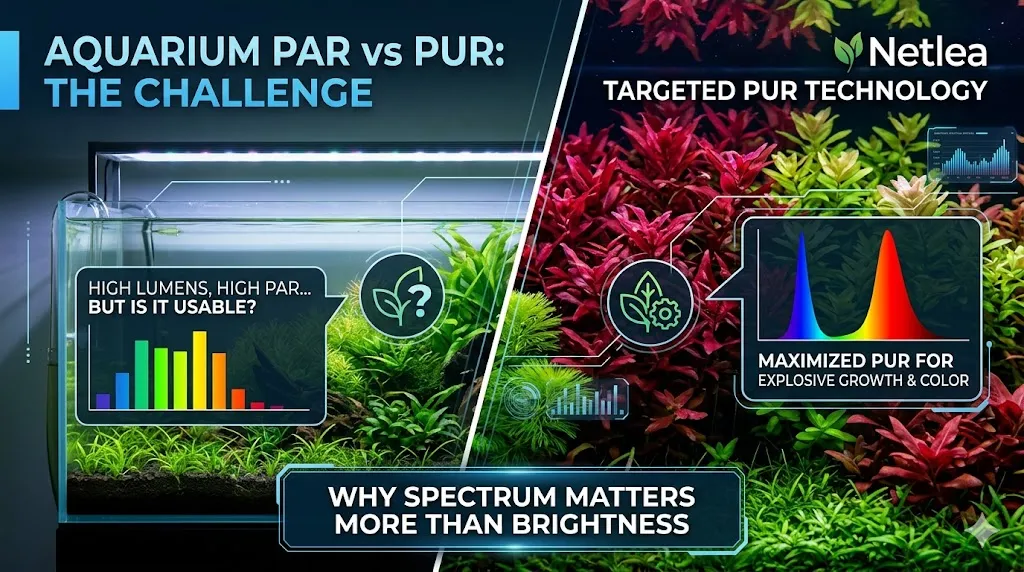
Have you ever read the specifications of a new LED light and felt completely lost in the numbers? If you want to master planted tank lighting tech, understanding the difference between aquarium par vs pur is absolutely essential. It is the secret to unlocking explosive plant growth and preventing stubborn algae.
For a long time, aquascapers relied on watts and lumens. Today, we know better. Let’s break down exactly what these advanced scientific metrics mean and how to use them to your advantage.
What is PAR in Planted Tanks?
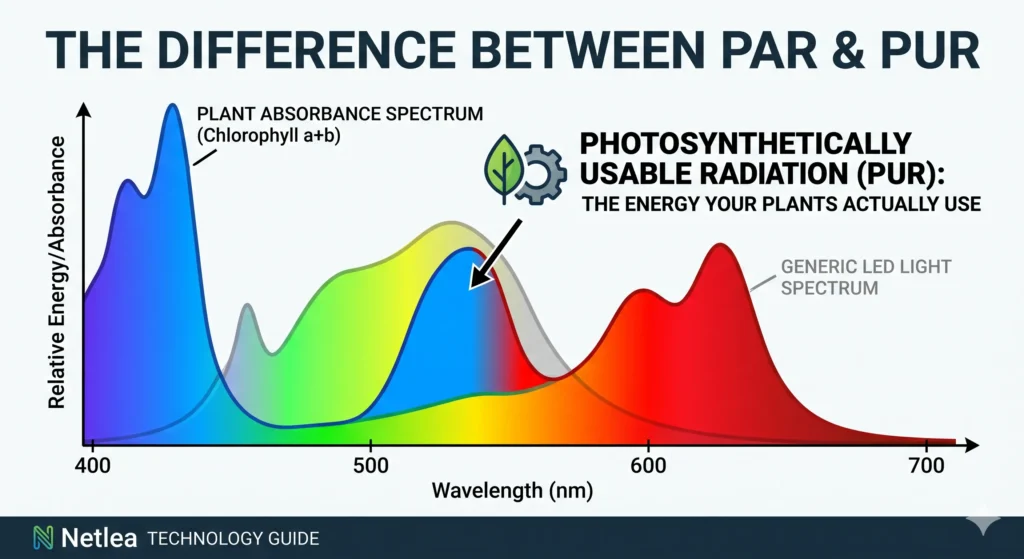
When researching aquarium par vs pur, PAR is usually the first metric you encounter.PAR stands for Photosynthetically Active Radiation . It measures all the visible light emitted by your fixture within the 400nm to 700nm wavelength range.
Think of PAR as the total volume of “food” being thrown into your tank. A higher PAR number means more light particles (photons) are hitting the bottom of your aquarium. While having enough PAR is crucial for carpeting plants like Glossostigma elatinoides, it doesn’t tell the whole story. Why? Because plants don’t “eat” all light colors equally.
What is PUR and Why Does It Matter?
To truly understand the core of aquarium par vs pur, you must know that PUR stands for Photosynthetically Usable Radiation. If PAR is the total amount of food on the table, PUR is the specific food your plants can actually digest and use.
Aquatic plants predominantly absorb light in the blue (400-500nm) and red (600-700nm) spectrums. A light fixture might have a massive PAR reading because it blasts a ton of yellow and green light, but its PUR could be terribly low. In this scenario, your plants starve, while algae thrives.
Aquarium PAR vs PUR: Which Metric Should You Trust?
When battling the aquarium par vs pur dilemma, the answer is that PUR is the true indicator of a high-quality light.
PAR meters are easy to buy, which is why manufacturers love to advertise high PAR numbers. However, PUR is much harder to measure because it requires analyzing the specific spectral graph of the LED. As a smart consumer or professional aquascaper, you should always look for lighting systems that prioritize a high PUR percentage out of their total PAR output.
The Netlea Advantage in the Aquarium PAR vs PUR Debate
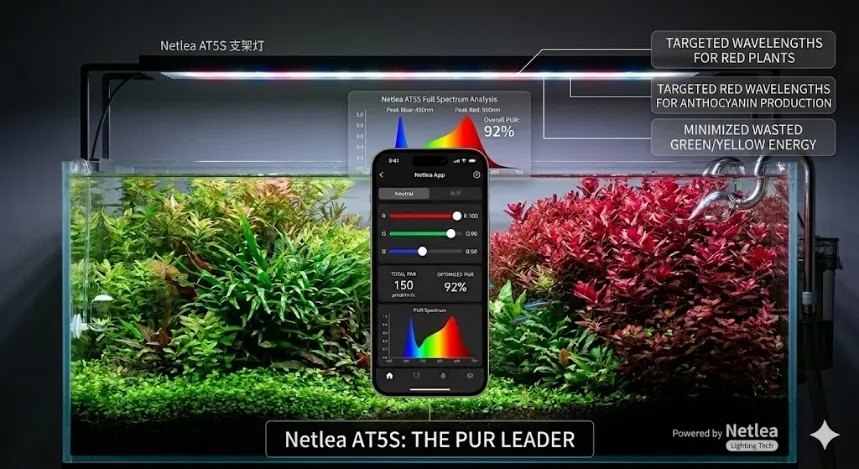
This is exactly where high-end lighting tech makes a difference. At Netlea, we solve the aquarium par vs pur problem by engineering our lights to maximize usable energy.
- Targeted Spectrum: Our LEDs are specifically tuned to spike in the exact red and blue wavelengths that aquatic plants require for photosynthesis and anthocyanin production.
- Zero Waste: By minimizing the useless green and yellow output, Netlea lights ensure that the energy you pay for is converted directly into plant growth.
- Smart App Control: With our custom spectrum adjustments, you can further refine the light output to match the specific PUR requirements of your unique layout.
Conclusion
The next time you evaluate lighting tech, remember that the aquarium par vs pur distinction is what separates average tanks from world-class aquascapes. Don’t just pay for raw brightness; invest in usable energy.
Ready to provide your plants with the exact spectrum they crave? [Discover Netlea’s professional lighting technology today] and elevate your aquascaping journey.