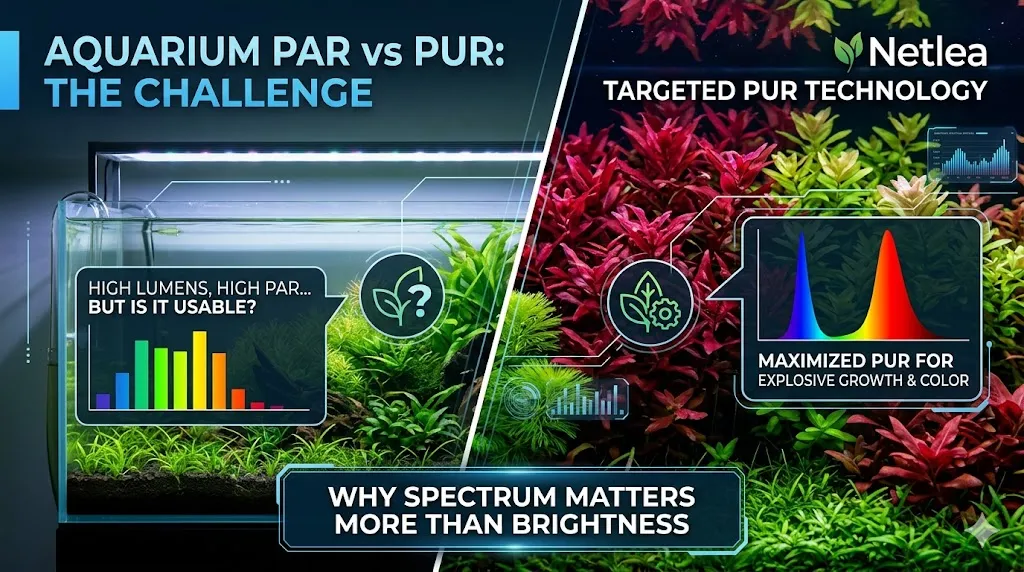
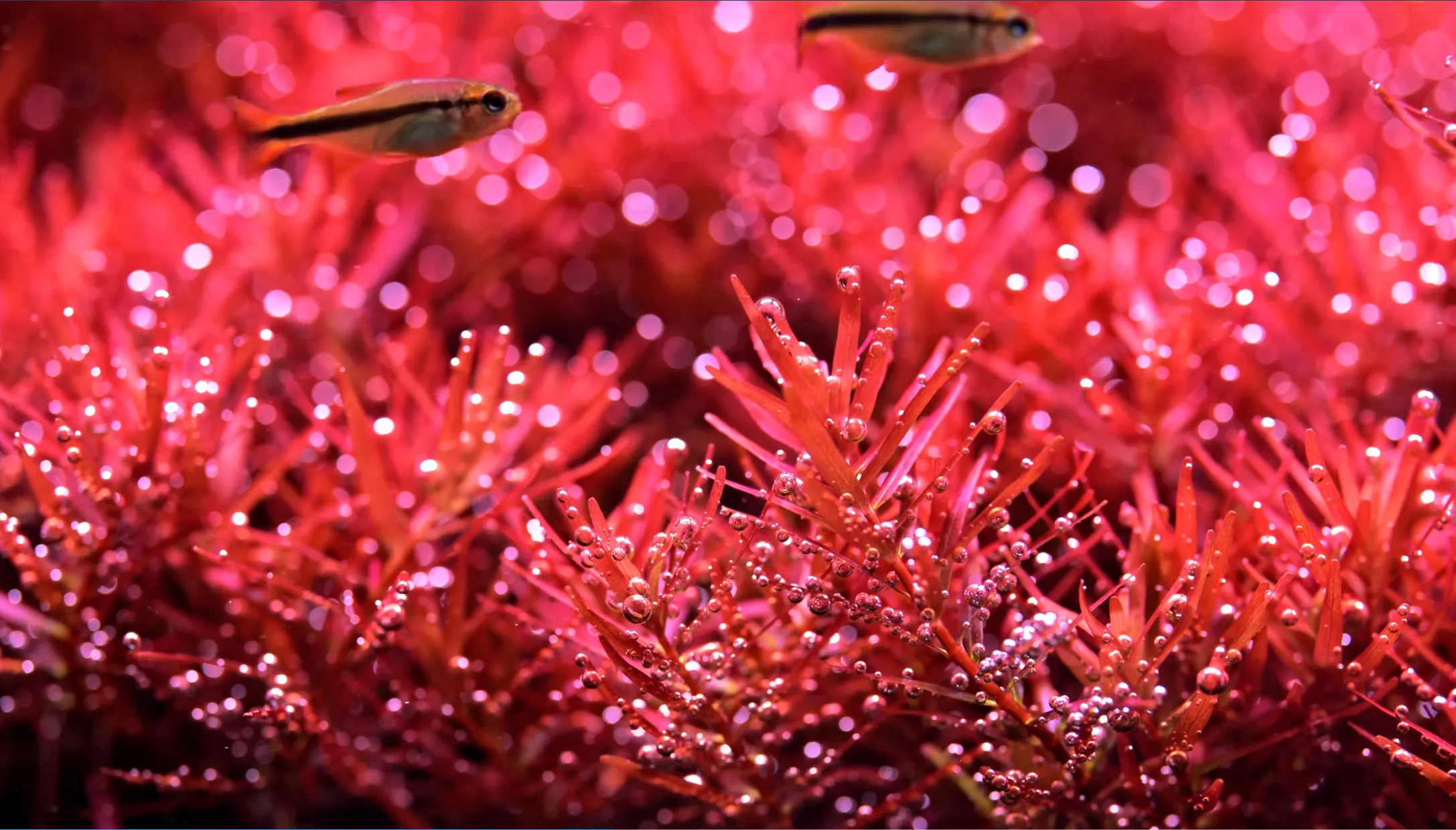
Have you ever bought an incredibly bright LED for your aquascape, only to find your red plants turning green? The secret to a thriving tank isn’t just brightness; it requires a deep understanding of the planted tank lighting spectrum.
For years, beginners have chosen aquarium lights based on a single metric: how bright it looks to the human eye. But when it comes to aquatic plants, brightness is only half the story. Here is a deep dive into the science behind the spectrum, and how to choose the right light to make your underwater world pop.
Understanding Aquarium PAR vs Lumens
To understand why a “bright” light might fail your plants, we need to distinguish between how humans and plants perceive light.
- Lumens (Brightness): This measures how intense light appears to the human eye. Our eyes are highly sensitive to green and yellow light. Therefore, a light with a heavy green/yellow spectrum will look blindingly bright to us.
- PAR & PUR (Usable Light): Plants don’t care about lumens. They rely on PAR (Photosynthetically Active Radiation) and PUR (Photosynthetically Usable Radiation). These metrics measure the exact wavelengths of light that plants can actually absorb to perform photosynthesis.
If your light is pumping out thousands of lumens but mostly in the green wavelength, it might look stunningly bright to you, but your plants are essentially starving in the dark.
What Does a Perfect Planted Tank Lighting Spectrum Look Like?
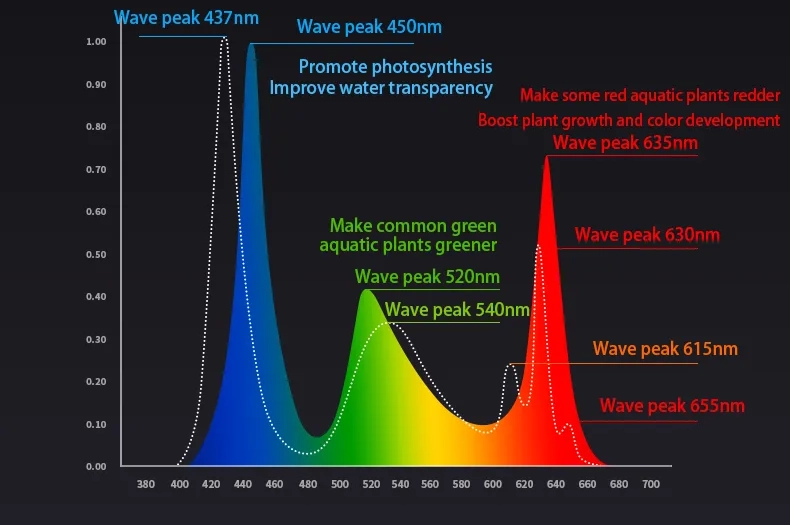
Aquatic plants, especially demanding stem plants and carpeting species, rely heavily on specific peaks in the light spectrum to grow and develop rich colors.
Red Light (600nm – 700nm): Red wavelengths are the engine of photosynthesis. They drive overall growth and, importantly, trigger the production of anthocyanins—the pigments that give plants like Rotala Macrandra and Alternanthera Reineckii their stunning, deep red coloration.
Blue Light (400nm – 500nm): Blue wavelengths are crucial for structural growth. They encourage plants to grow dense and compact, rather than stretching thinly toward the surface.
Color Rendering: Making Your Aquascape Pop
Beyond keeping plants alive, your light serves a critical aesthetic purpose. A poorly balanced spectrum will wash out the colors of your fish and plants, making everything look flat and artificial.
Investing in a high-quality full spectrum aquarium light enhances color rendering. It highlights the neon blues of your cardinal tetras, the vibrant greens of your mosses, and the striking crimsons of your background plants. A balanced planted tank lighting spectrum is the key to presenting a natural, high-contrast visual feast.
The Netlea Advantage for Your Planted Tank Lighting Spectrum
This is exactly where Netlea bridges the gap between scientific plant growth and stunning visual appeal. We don’t just build “bright” lights; we engineer precise spectrums tailored for aquascaping.
Here is how Netlea’s technology transforms your tank:
- Optimized PAR/PUR Output: Netlea LEDs are calibrated to deliver energy exactly where your plants need it. Instead of wasting power on useless wavelengths, our lights penetrate deep into the water column, ensuring even your shortest carpeting plants get the energy they need to spread.
- The “Red Plant” Enhancer: One of the biggest challenges in the hobby is maintaining deep red foliage. If you are searching for the best light for red aquarium plants, Netlea’s specialized spectrum includes enhanced red peaks that not only stimulate anthocyanin production but also visually amplify the red hues in your tank.
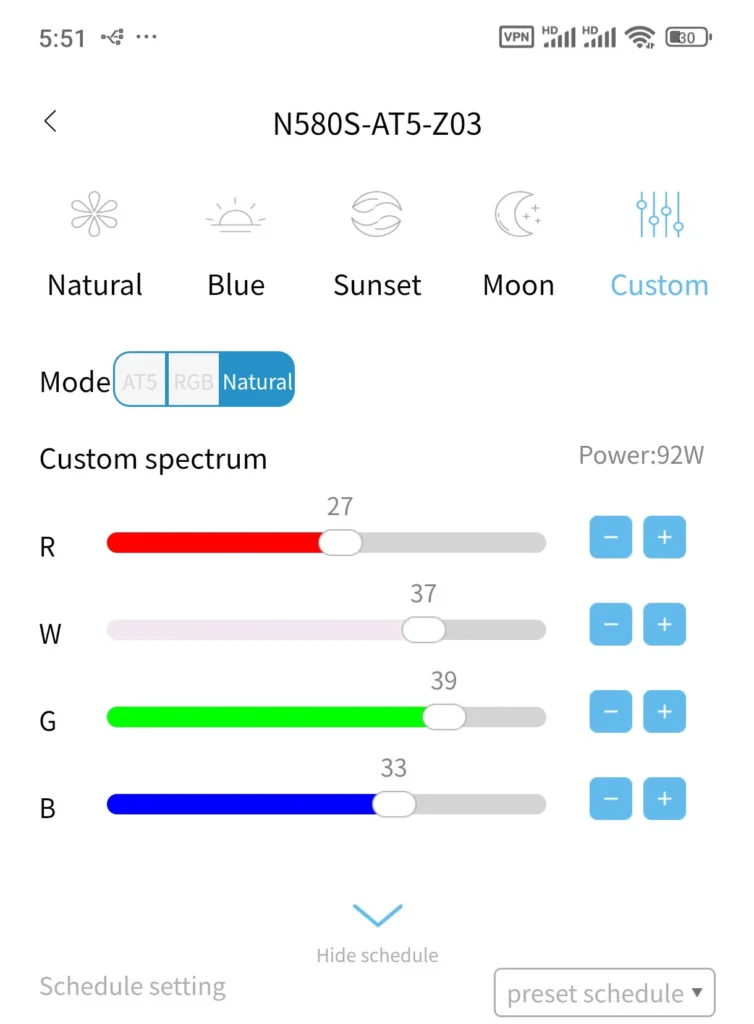
- Customizable Smart Control: Every aquascape is different. Through the Netlea App, you aren’t stuck with a single spectrum. You can fine-tune the red, green, and blue channels to perfectly match the specific needs of your plants, and set smooth sunrise/sunset transitions to reduce stress on your livestock.
Conclusion
When shopping for your next LED, remember that the right planted tank lighting spectrum is far more crucial than sheer wattage. Providing your plants with the correct wavelengths will result in denser growth, less algae, and breathtaking colors.
Ready to unlock the true potential of your aquascape? [Explore our professional aquarium lighting]and see the difference real science makes.